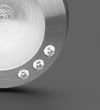


 - First attempt? You have done a great job!!
  Great clarity on the diamond!
 - First attempt? You have done a great job!! Great clarity on the diamond!
 Here you can see it:
Hi Tomtom wrote:Actually, there's something missing in every single jewelry render that hurts my eye and quickly hits the wall. The diamond cut should have very low rough micro bewels on the edges of facets. I think you can imagine how much realism it could add.
http://www.wellpromo.com/upload/upimg79 ... -19579.jpg
http://c0373252.cdn.cloudfiles.rackspac ... n_zoom.jpg
http://treesflowersbirds.files.wordpres ... iamond.jpg
http://www.feng-shui-products-decoratin ... 410091.jpg
http://diamondstudearrings.files.wordpr ... iamond.jpg
-edit: Also the gold part needs more subdivision as it shows faceting in this closeup.
Hi Cary.. Hmm.. so maybe I was wrong in what I just wrote above, but I actually thought the same as Tom, as you usually see these tiny bevels on, well guess "diamonds"...caryjames wrote:Hey Tom, actually most of those pictures were of materials other than diamond. As a Gemmologist one of the defining indicators between diamond and its imitation counterparts is the absence of those micro bevels. Those small bevels are created in polishing in materials softer than diamond. Looking for those small rounded edges is one of the first diagnostic criteria that you are looking for when trying to determine if a stone is diamond or another material.... if they are present you know you are not looking at a diamond. Granted at an extremely high magnification (electron microscope) you would likely see very small rounded edges. Not showing off just figured I would chime in
Neeper... really nice render! The diamond looks too dispersive to me but your lighting and metals look great!
Cary
-- I used a Forrest spherical HDRi files.. It was a bit geenish, so I had to correct the colors afterwards, but it gave some interesting dispersion in the diamond.. Maybe a bit too much as Cary James mention... But it can be controlled, I have 2 layers of Diamond, one with, and one without lens scattering, and then composed in PS.philip99 wrote:great job for attempt, diamond very clear what did you use for lighting
good to see some jewels
Yes, I admit they were not ideal examples. My intention was showing them off clearly.caryjames wrote:Hey Tom, actually most of those pictures were of materials other than diamond.
Agreed. In fact I knew somebody would come up with this fact but still, nothing -even diamond- can have absolutely perfect cut.caryjames wrote:As a Gemmologist one of the defining indicators between diamond and its imitation counterparts is the absence of those micro bevels. Those small bevels are created in polishing in materials softer than diamond. Looking for those small rounded edges is one of the first diagnostic criteria that you are looking for when trying to determine if a stone is diamond or another material.... if they are present you know you are not looking at a diamond.
I've said "micro" (1/1000 mm) and maybe it's still above the toleration in producing diamonds. Can you tell us what's the biggest acceptable crease size in diamond production?caryjames wrote:Granted at an extremely high magnification (electron microscope) you would likely see very small rounded edges.
No, it's really welcome!caryjames wrote:Not showing off just figured I would chime in
!!! I too would like to see the effect. May take a couple of weeks but I am going to check it out.. will post results when finished
  - By Matteo Villa
With no support to Blackwell RTX 5000 we had to sw[…]