
Not there yet? Post your work in progress here to receive feedback from the users.
By bunkiojo
#298826
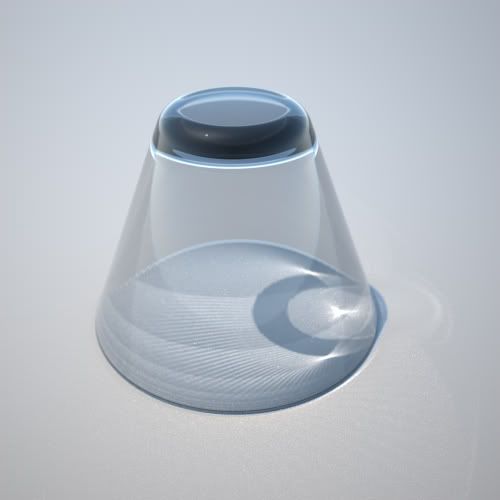
I'm working on a little personal project that will greatly benefit from caustics displaying through the object casting them, which is, of course, not officially possible right now with Maxwell. I have tested a 'sort of, kind-of' accurate work-around, the result of which is below:
Image
Basically just an overturned shot glass-type object. The caustics seem to have a banded appearance, a result of low poly count, I'm guessing; that can be fixed later, I think.

Looking for your opinions on this. Is this even remotely convincing to you folks? If not, can you tell me what is not right about it?

Thanks,
Elliot
User avatar
By JorisMX
#298841
I've experienced similar results with dielectrics in Cinema 4D.

I had these "banding" or faceting errors when using the phong tag with edge breaks enabled.
Turning these off got rid of all problems.

If you are not working with this package it might be helpful to state what configuration you're working with
By bunkiojo
#298915
Thanks guys, I'm glad it seems reasonable to you.

JorisMX,
I'm using 3DS Max 9, and I'm not familiar with C4D; I'm pretty sure I enabled smoothing groups, which I would have thought would clear something like that up, but I'll be double checking that.

Fernando Tella wrote:May I ask what workaround are you using?
Fernando,
What I did was this:

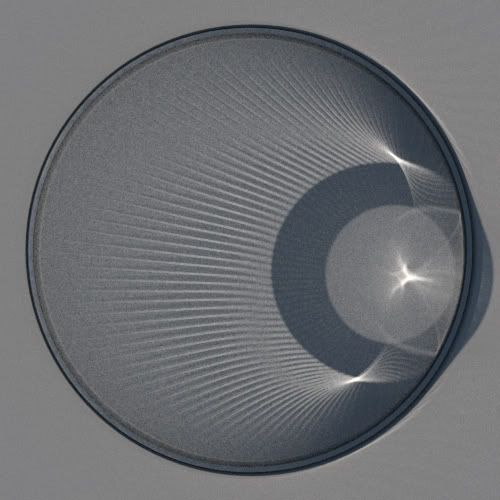
After setting up the scene (just the glass and a plane), I first rendered a shot of the glass from straight above (perpendicular to the plane), but I set the glass to be 'invisible to camera', which produced this:
Image

I saved it as an HDR.

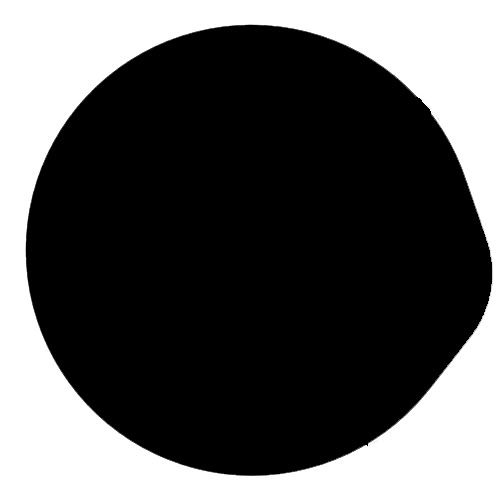
Then, I made a clip map in Photoshop:

Image
it's a bit clunky, but I was just testing.

I then applied the HDR to a small plane, coincident with the ground plane and directly under the glass
I placed the clip map in the transmittance slot, and re-enabled visibility on the glass.
Then I could adjust the HDR/MXI emitter while rendering until it looked pretty close. Hardly scientific, but I think it will do for some circumstances

Kurt,
No, I didn't use the method you pointed out, but I do think I need to put some stuff under the glass and see if I can get the pattern to show on the object AND refract...

I think the next one I make I will generate the caustics on a black plane so I can more easily isolate the caustics patterns, and see where that will get me.
User avatar
By KurtS
#298972
thats a very interesting and clever workaround, but IMO a bit to much work just to get some caustics... Imagine you have fifty glasses and a bunch of bottles...
By tokiop
#298981
Nice trick et clean results :) Not production ready but it shows that caustics through glass exists in real life, since they now show up in unbiaised maxwell ! Should be shown at Siggraph.. "as easy as taking a photo"
User avatar
By KurtS
#299159
tokiop wrote:Nice trick et clean results :) Not production ready but it shows that caustics through glass exists in real life, since they now show up in unbiaised maxwell ! Should be shown at Siggraph.. "as easy as taking a photo"
I think Maxwell 2.0 might have some more on this...
By tokiop
#299176
Sure NL must be preparing an update on this problem, i was just having fun of "unbiaised calculated" vs "unbiaised looking" paradox.. :)

So, is this a known issue?