
By rober
#297312
Hi ,
excuse me for my poor participation
my life is very disorderly:)!

when I work with diamonds I don`t understand some things :

1-In my ignorance I never understand well "what is noise"? Is it these pixels that I see when I zoom especially in the diamonds? When isn't there noise?If I zoom more I continue to see pixels!!!
2-How can I eliminate this dominance of "blue" color that always appears in diamonds? With HDR or lights whitout colors?
In Jewelry it is important to see a perfect white in
diamonds
3 -How can I have good renders in a razonable time with 50-100 stones in the scene?Here I have 40 hours and 20 SL!!!

rober


Image
User avatar
By Mihai
#297327
What are you using to light your scenes? From that render it looks like Physical Sky? Or at least something blue reflected also in the metal parts, so that's what you're seeing in the diamonds as well. The render looks pretty noise free. If you post a screenshot of your scene setup it will make it clearer what can be optimized.
User avatar
By caryjames
#297329
Hi Rober- Here are a few tips when rendering diamonds......

* Always make sure that the diamond is not intersecting any metal- this will ALWAYS give your stones a blue colour
* As Mihai mentioned it does look like you are using a very flat light source. This is good to make your metal look nice but not always to give you brilliant diamonds. For brilliant diamonds try to use some "dazzler" light sources- small emitters- either physical or make a bunch of small white shapes on black in photoshop and then turn that into an mxi emitter.
* For giving reasonable render times try to reduce the polycount of your diamonds this was a trick I learned last week from Ricardo

http://www.maxwellrender.com/forum/view ... 13&t=31211

* Also try to block your diamonds before you array, copy etc. that way you will render as if you have only one stone in the scene. I was previously doing this but slightly incorrectly Polyxo helped give me perspective on what should be happening

http://www.maxwellrender.com/forum/view ... 13&t=31217

Even after all these points I have found a dominant blue colour to the dispersion in my renders. You don't often see this blue colour in photographs of diamonds but if you study some nicely cut diamonds you will find a predominance of blue and orange in the dispersion colours.

Hope that helps
Cary
By rober
#297344
Thankyou boys,
the illumination is "imaged based"...5-6 big panels of cold lights , a little panel of warm light and a HDR(cold?) in every channel but not in Background...I will post the screenshotand ,I will study the links but

....some fast considerations before :
1- for my " automatic" sistem (rhinojewell) of placing stones, solid for holes, grains (hundreads) I see the imposibility
to controll thousands of situacions where a stone (also 100,200,300...) can intersecting a little
quantity of metal!!!
2-I don't understand very well "to use some dazzler light...................................
3 Do yo know Rhinojewel or Techjewell ? I have blocks stone,solid for boolean /hole, that I explode for booleans and manifacturing of the piece...I will try
no explode...and hide the solid...

Rober
User avatar
By caryjames
#297380
Hi Rober: I too have Techgems but have found it better to use Rhino's tools. You can accomplish the exact same things in Rhino that you can in Techgems only you have ultimate control in Rhino whereas in Techgems you are limited to their wizards.

In Rhino you can create a gemstone, drill hole and claws as one unit (create the gem so that it does not intersect the drill hole and claw) then you can array, copy that as many times as you want.

If you are using images with colour to light your scene you will see that colour in your render/diamonds. Since you are using an hdr to light your scene why not use a studio lighting hdr? Some to start with would be from "hdr light studio". They also have hdr's with colour but generally these will make your scene tinted blue, yellow etc.

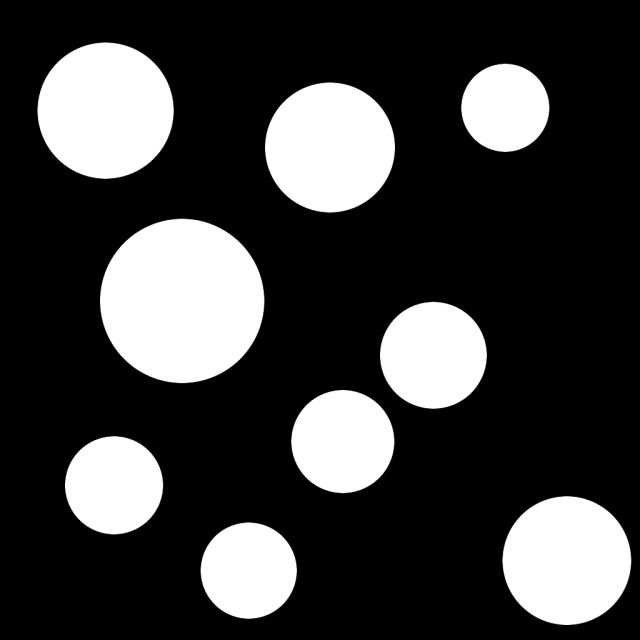
By dazzler light I mean a bunch of tiny emitters- you can model these emitters individually or you can create an .mxi emitter by going to photoshop and creating a lot of white circles (any shape will do) on a black background.

Creating an .mxi dazzler is a bit better with respect to render time than a lot of tiny emitters (correct me if I am wrong guys) Here is how you do it

* Open Maxwell Render
* Select load image
* Browse to the file you created in photoshop and select
* When the image is loaded you select ......save as .mxi.
* Then go to your scene, create an emitter and select "image emission texture" then select the .mxi you just created and voila you have a "dazzler" light that you can place somewhere in front of your jewellery to create a really good dispersion effect.

Here is an example of a "dazzler" light. Hope this helps

Image
User avatar
By ivox3
#297393
rober wrote:Thankyou boys,
the illumination is "imaged based"...5-6 big panels of cold lights , a little panel of warm light and a HDR(cold?) in every channel but not in Background...I will post the screenshotand ,I will study the links but

....some fast considerations before :
1- for my " automatic" sistem (rhinojewell) of placing stones, solid for holes, grains (hundreads) I see the imposibility
to controll thousands of situacions where a stone (also 100,200,300...) can intersecting a little
quantity of metal!!!
2-I don't understand very well "to use some dazzler light...................................
3 Do yo know Rhinojewel or Techjewell ? I have blocks stone,solid for boolean /hole, that I explode for booleans and manifacturing of the piece...I will try
no explode...and hide the solid...

Rober

This is the one thing that I keep thinking about with complex pieces ----- the possibility of thousands of intersections. I can only think that during the modeling process you just have to really pay attention with any given assembly that's intended for block/instances, ...so downstream you have no problems. It's just a specific workflow --- forces you to be neat, albeit painful at times.

I don't think that anytime soon we can expect Maxwell to behave any different regarding this intersection thing -- and probably shouldn't.


Question: Is a boolean difference considered non-intersecting ? It seems that objects that are coincident might be a problem ? Just wondering because I always create a separation.
User avatar
By caryjames
#297399
Hey Ivox- If you don't scale your diamond down or your drill hole up the boolean difference will create a contact- still considered an intersection-- between your stone and object body. I have found that even a contact between two surfaces creates a problem albeit different with blocks vs unblocked .... with blocks it makes your render time go nuts and with unblocked pieces it will create a blue colour to your diamonds.

Now I model with that in mind like you said..... I will create a drill hole for the size that I am going to manufacture the piece I then scale down my diamond so that after I boolean I will have the diamond "floating" in air- then I will array, copy etc --this will allow the dispersion to "work" correctly
By rober
#297400
Hi Caryjames...I like that a person work on the same kind of problems like me:)!
I will try all you said that is very very interesting...
But some questions:
1- Your target is to manifacturing these jewells? Have you many pavè ?I think yes! ...with hundreads of stones I read
Are you sure not need of Techjewell ( Rhinojewell is the last and better with many sofisticate options and comands). I would't know how work without Rhinojewell for manifacturing .And would be a problem remake the placing of stones,claws,...only for render target.
The perfect solution would be .... with one work = 2 targets (manifactury and rendering)
2-I trying now with the same set and scene with only 3-4 diamonds "flying" out of the jewell (no intersecting with metal) produce the same "blue color"...no intersecting with metal is important only for time reduccion? Only If this time would be big to compensate me not use Rhinojewell (?!?)
[img=http://img353.imageshack.us/img353/2812/flystones.jpg]
Hi Ivox3 :) I see you in this moment
..."forces you to be neat, albeit painful at times" ...This conect with "my life disorderly" ...I work very much , forced me to be neat referenting quality of manifacturing for "To make a sale" of my modeling 3d for manifacturing and If I think to invert other time ( remember ...thousands of litttles intersections...)for
rendering I don't see the business:)!My first and important business is manifacturing with Solidscape.

But ,a stupid question... at moment the TIMES or CRASHES are not very important problem for me... like this antipatic "blue" ...if I concentre me only in this ?
rober
User avatar
By ivox3
#297402
@ Cary:

Thanks ... that's what I thought.

And yes, ...your method is the exact process.

When you scale down, ..... what are we talking, ...... 0.001 ? Is that enough ?
User avatar
By ivox3
#297403
But ,a stupid question... at moment the TIMES or CRASHES are not very important problem for me... like this antipatic "blue" ...if I concentre me only in this ?
rober

rober ...... sorry, ..would you mind rephrasing this ? ...or someone provide a translation ? :)
User avatar
By ivox3
#297404
This is an old example, ..but one I'm happy with the 'white' level of the diamonds ....

Glints of blue are fine to me, but they should just be glints --- Using a B&W hdr/mxi is the first place to start though ....

If there is an overall cast of blue, ..then something else is wrong. Still, .. that is easily enough removed using a blue channel in post (if the render is good to begin with).

Image
User avatar
By caryjames
#297405
Hi Rober- Yes I manufacture the jewellery all of the time... well sometimes I just model for fun :)....but normally I manufacture everything. Yes I haven't found a need for Techgems- usually they are just scripts made from Rhino commands anyway and "array on curve", " array on curve on surface" and the other tools have always been better for me- besides if I ever ran into a problem I could just call the guys at Rhino- try doing that at Techgems :).

Rober- Initially I thought that I would have to make two models- one for rendering and one for manufacturing. Now I just model everything from input curves that are as good as I can get them to minimize my filleting after the solid is created. So now I create one model that is good for rendering and for manufacturing.

Here is an example not of pave but of dispersion in the diamonds... there is a blue component to the dispersion but as I wrote earlier it is there in natural diamonds as well. For this example I created a white plastic for the floor - made after studying JD's material in the perfume bottle tutorial. I then used Hyltom's LDR "Top only" and I then put a couple of dazzler emitters out front.

Image
By rober
#297414
escuse for my english... a big handicap to participate at the forum
In this moment the important for me is to eliminate "invasive blue" not "glints " of blue
that are good! Large times of rendering it's not important at the moment... if the cost would be " hours of works to eliminate
thousands of intersections"
Caryjames... I don't know if pavé is the correct traduccion of a surface to fit with hundreads of stones with various diameters...infinite organics extense surfaces always diferents .......with a caracteristic large complex estrategy (geometric and artistic...not automatic) to fit correctly and Rhinojewell in this case brind you the maximum level of automatism posible dificult to resume but very sofisticate and eficently...
in this case there are importants limits for To progress this comand like 100% automatic comand (only in this task especific)
also others comands are for me very profit: only an example...creator ring
In your example there are simple linear rows of stones no a great surfaces of stones...we don't need Rhinojewell "pavè"comand here.
I see that you are (Ivox3 and Caryjames) much more beyond in set renders. I continue trying all you said ...
Thankyou
rober
User avatar
By caryjames
#297417
Hi Rober- No problem about the English we will ask you if we don't understand- I think that you are getting your points across :)

You are correct about the earrings- simple array along curves, the only reason that I posted was to show the dispersion in the diamonds if the stones are "floating" in the setting.

I have not done a lot of pave with different sized stones- usually I pick a certain size diamond and then go from there using "array on curve on surface"- I usually project curves to whatever surface I am working on and then array along the curve on the surface. Are you saying that the new Techgems will perform this type of work with different sized stones automatically?

One of the guys over at the Rhino forum also scripted an "incremental array along curve on surface" command that works very well but I have not had to use it in quite a while.
By rober
#297427
I don't understood that the stones "floating"( not intersecting metals) ...or no:)?
I exit a bit of the argument if I can be profit...
Rhinojewell:
There are"matrix incremental" but I don't use...In a pavè not always we can respect the same curve projected when the surface
reduce in an edgeor in an angle for example, we here simulate an order that no exist, always in a lot of point of surface we need an "artistic" solution, to meet apparently
the use of the same diameter (or no in other style of pavè) and to fit well(? no see the metal under!with 0.1mm control for example not- contact 2 stones)with other diameter....
These problems geometric and artistic (no rational) will do a little imposible an automatic comand. Much more good an interactive comand with a good level of automatism ( reductive to speak only of automatic pavè)...only I resume the complexity...initially circles fit better the surface, then automatically the blocks (stone/solid for hole and block grain indipendent )fit in this circles,then calculation of number and size of stones(intresting for the customer),then Advanced Booleans to permite massive booleans(task unheeded?) with isolate 1-2-...problematic objects that in Rhino block or crash the process without know where is the problem, etc....

Now it's better to return at the argument render and to try,to try,to try!!!Is the last time that I massacre you unnecesary with my english:)!!!

Rober
OutDoor Scenery Question

you said: After you apply the image to the polygo[…]

fixed! thank you - customer support! -Ed